
So, you’re planning a wedding. You thought this would be all dress fittings, champagne toasts, and dreamy Pinterest boards—and somehow you’re knee-deep in cake samples you don’t even like, six versions of a seating chart, and trying not to strangle each other over whether your cousin’s random plus-one really needs a vegan entrée.

Let’s get this out of the way early: wedding planning is stressful. Like, next-level stressful. It brings out opinions you never asked for, financial conversations you thought you had already had, and decision fatigue so deep you start to question your stance on table linens and monograms.
But here’s the good news: wedding stress doesn’t have to wreck your relationship. In fact, if you handle it right, it can strengthen it.
Step One: Realize It’s Not Just About Cake and Chairs
The reason wedding planning gets so tense isn’t because you’re arguing about color palettes. It’s because you’re building something important, and you both want it to feel right. It’s emotional. It’s vulnerable. You’re not just picking centerpieces—you’re defining what your shared life is going to look like in front of everyone who matters.
So when one of you gets oddly intense about a font choice, it’s probably not just about the font. It’s about being seen, heard, and understood.
That’s not crazy. That’s human.
Step Two: You’re on the Same Team (Even If You Want Different Napkins)
This is the single biggest mindset shift you can make: your partner is not your enemy.
You’re not trying to win an argument—you’re trying to build a day that reflects both of you. If one of you is overwhelmed and the other seems checked out, don’t go to war. Get curious. Ask questions like:
“What part of this is stressing you out?”
“Is there anything you care about more than you’re letting on?”
“How can we divide and conquer without losing our minds?”
You’d be amazed what happens when you lead with teamwork instead of silent resentment and passive-aggressive Pinterest boards.
Step Three: Wedding-Free Zones = Lifesavers
We get it—you’re excited. Or panicking. Or both. But if every dinner, walk, and shower turns into a strategy meeting, you’re going to lose the very thing you’re celebrating.
Try this: pick a night each week where wedding talk is off-limits. Watch a dumb movie. Go for tacos. Lie on the floor and stare at the ceiling like you’re 17 again. Reconnect with the version of your relationship that exists outside the wedding planner app.
It’s not just cute. It’s necessary.
Step Four: Outsource the Opinions, Not Your Voice
There are so many people who want to “help.” And by “help,” we mean tell you what they did at their wedding and why you should do the same. Here’s your permission slip to smile, nod, and ignore it.
This is your relationship. Your vision. Your weird, wonderful, won’t-make-sense-to-anyone-else celebration of love.
Set boundaries early. Tell your families what you appreciate, what you’ll take under advisement, and what’s a non-negotiable. And if all else fails? Blame it on the budget.
Step Five: Let It Be Messy (Because It Will Be)
You’re going to fight. You’ll misread texts, forget appointments, and maybe cry over a spreadsheet. This doesn’t mean you’re failing. It means you’re doing the thing.
The couples who make it? They don’t avoid stress. They acknowledge it, apologize fast, and come back to each other quicker than they drift apart.
Let go of perfection. Let in compassion. And maybe—just maybe—laugh at the absurdity of spending four hours choosing a cake topper shaped like tiny versions of yourselves.
The Bottom Line
Planning a wedding won’t make or break your relationship. But how you handle it together? That can tell you a lot.
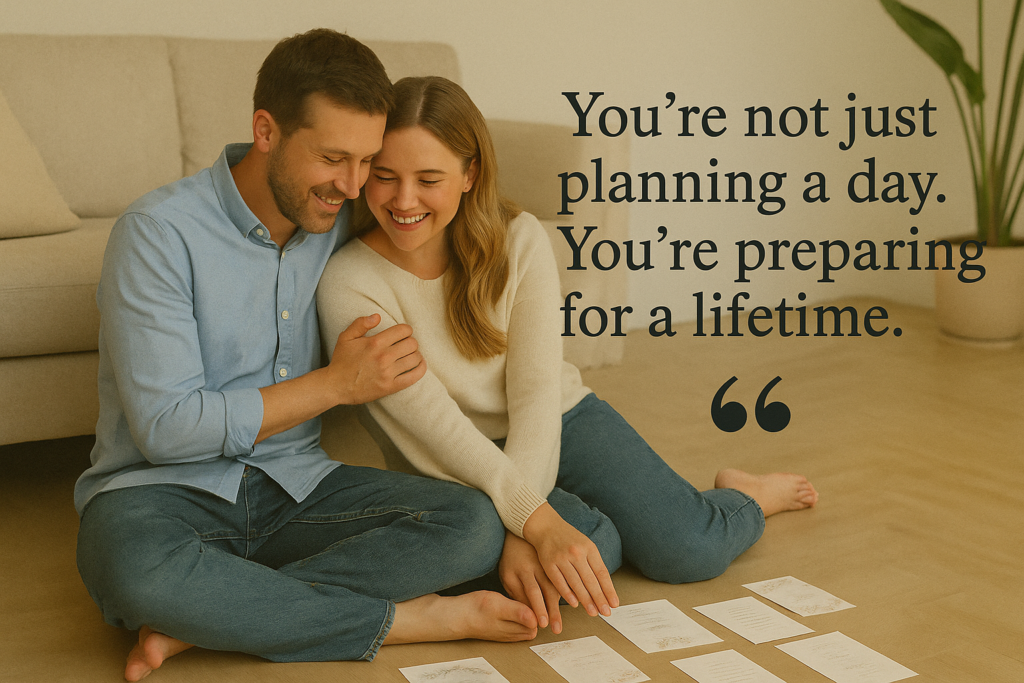
So when the band cancels or your florist suddenly stops returning calls, don’t just survive it—use it. Use it to grow your toolkit of communication. Use it to practice having each other’s backs. Use it to remember that you’re not just planning a day. You’re preparing for a lifetime.
And when it all feels like too much?
Grab a fork. Eat the cake. Hug your person. You’re doing just fine.